How Alcohol Affects the Brain: What Dr. Andrew Huberman’s Research Helps Explain

Most people know alcohol affects the brain. But knowing that in theory and understanding what's actually happening inside your body are two different things. Dr. Andrew Huberman, a neuroscientist at Stanford University, has brought real clarity to that gap, explaining the biology of alcohol in a way that feels informative rather than alarming. If you've been rethinking your relationship with alcohol lately, you're not alone. And the science gives you good reasons to pay attention.
What actually happens in your brain when you drink
Alcohol is often called a social lubricant, something that loosens you up and makes you feel more at ease. But that early feeling is misleading. Alcohol is a depressant, and what often feels like relaxation is actually your brain slowing down rather than becoming more stimulated.
The two systems alcohol disrupts first are GABA and glutamate. GABA is your brain's primary calming neurotransmitter. Alcohol amplifies its effects, which is why tension fades quickly. Glutamate drives alertness and cognitive function. Alcohol suppresses it, slowing your thinking and reaction time even when you feel perfectly fine.
Alcohol crosses the blood-brain barrier within minutes of your first drink. That speed is part of why the effects feel so immediate, and why your brain starts adjusting its chemistry almost straight away.
Alcohol and dopamine: why it feels good (and why that's complicated)
Drinking triggers a dopamine release in the brain's reward pathway. That release is real, and it's part of why alcohol can feel genuinely pleasurable in the moment. The problem is what happens with time.
With repeated drinking, your dopamine baseline may shift downward over time. Your brain recalibrates to account for the regular spikes, which means everyday activities start to feel less rewarding by comparison. The pleasure response to alcohol weakens, but the craving response strengthens. You need more to feel the same effect, and you feel less satisfied without it.
Huberman describes this as a core feature of the habit loop alcohol builds in the brain. The brain begins to associate drinking with relief and reward, so the pull toward alcohol grows stronger even as the actual enjoyment fades. Understanding that the cycle is not about feeling bad about your choices. It is about seeing more clearly what may be driving them.
How alcohol affects mood, stress, and your hormones
Alcohol can affect serotonin, a neurotransmitter closely tied to mood stability. That's why many people notice a dip in mood the day after drinking, even after a fairly light night. It's not imagined. It's a measurable shift in brain chemistry.
Cortisol, your primary stress hormone, rises both during and after drinking. This creates a rebound effect where your body enters a mild stress state even though alcohol initially felt calming. That's the biology behind next-day anxiety, sometimes called hangxiety. It is not just “in your head.” It can be connected to real shifts in stress hormones and nervous system regulation.
Regular alcohol consumption may also influence hormones such as testosterone and estrogen over time, which can affect energy, mood, and how you feel from day to day.
What alcohol does to your sleep
Alcohol does make falling asleep easier. That part is true. But the quality of sleep you get is significantly worse, and that distinction matters more than most people realize.
REM sleep is the phase where your brain consolidates memory, processes emotion, and restores cognitive function. Alcohol suppresses REM sleep, often dramatically in the first half of the night. Even if you sleep for eight hours, your brain may not get the same quality of restoration it would without alcohol in your system.
Huberman has been direct on this point: even moderate drinking affects sleep architecture. The next-day effects, reduced focus, lower mood, and stronger cravings, can be connected to how alcohol affects sleep quality and brain chemistry overnight.
The brain over time: what regular drinking gradually changes

The brain is adaptable, but regular alcohol use can make that adaptability harder to support. Neuroplasticity, your brain's ability to form new connections and learn, slows with regular alcohol use. It's gradual, which makes it easy to miss.
The prefrontal cortex, the part of your brain responsible for decision-making and impulse control, is particularly affected by consistent alcohol consumption. Over time, this may affect focus, follow-through, and emotional regulation.
Tolerance is often framed as the body getting used to alcohol. Huberman reframes it more accurately: tolerance is a sign that the brain has structurally adjusted. It's not a neutral adaptation. It means the brain has changed to accommodate something it's working around. His position on this is clear and worth sitting with. For brain health, the safest approach is generally to drink less often, drink less overall, or avoid alcohol when that feels right for you.
What happens when you cut back or stop
The brain can recover. The timeline depends on how much and how often you have been drinking, but many people notice improvements within the first few weeks of cutting back.
Sleep tends to improve first, followed by mood stability and sharper focus. For many people, these aren't small changes. They feel like a genuinely different baseline.
The first few weeks can feel harder before they feel easier. The brain is recalibrating, and that process isn't always comfortable. Cravings, disrupted sleep, and mood fluctuations are common early on. Knowing that this is temporary and biological makes it easier to stay with.
Small, consistent changes tend to work better than all-or-nothing approaches. Cutting back gradually, building new evening habits, and giving your brain time to adjust is more sustainable than dramatic resets that rarely hold.
Supporting your brain on days you choose not to drink

On days you're not drinking, a few simple habits go a long way. Hydration supports how your brain and body function at a basic level. Morning light exposure helps regulate your circadian rhythm, which supports better sleep and mood. These aren't complicated steps. They're foundational.
Ingredients that support inflammation balance and antioxidant protection are worth paying attention to as well. Turmeric in a bioavailable form helps support the body's natural inflammatory response. Elderberry and Vitamin C are commonly used to support immune function. Pterostilbene, a compound found in blueberries, is recognized for its antioxidant properties. These ingredients work best when they show up consistently, which is where daily habits matter most.
Choose a daily ritual that supports tomorrow’s you
The takeaway from Huberman’s research is not guilt. It is clarity. When you understand how alcohol can affect your brain, mood, sleep, and recovery, it becomes easier to choose habits that support the way you actually want to feel the next day.
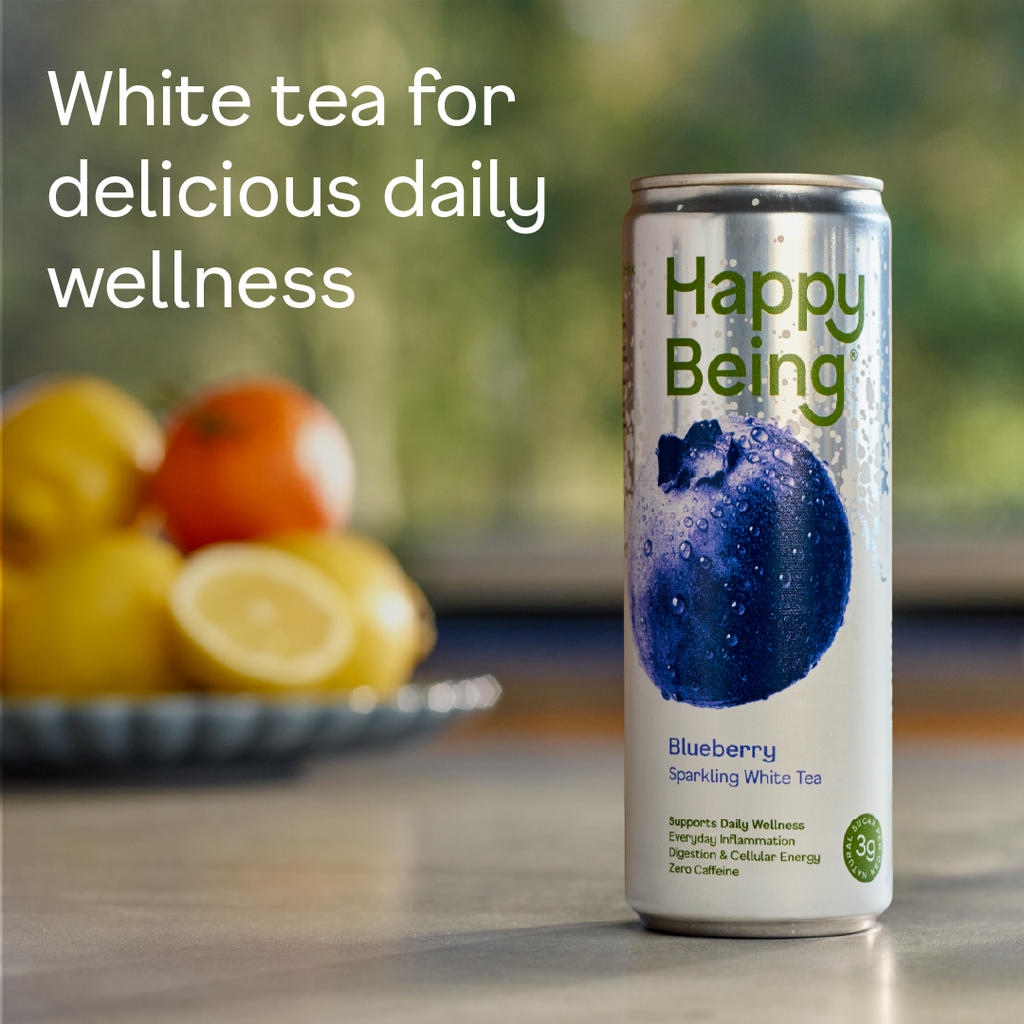
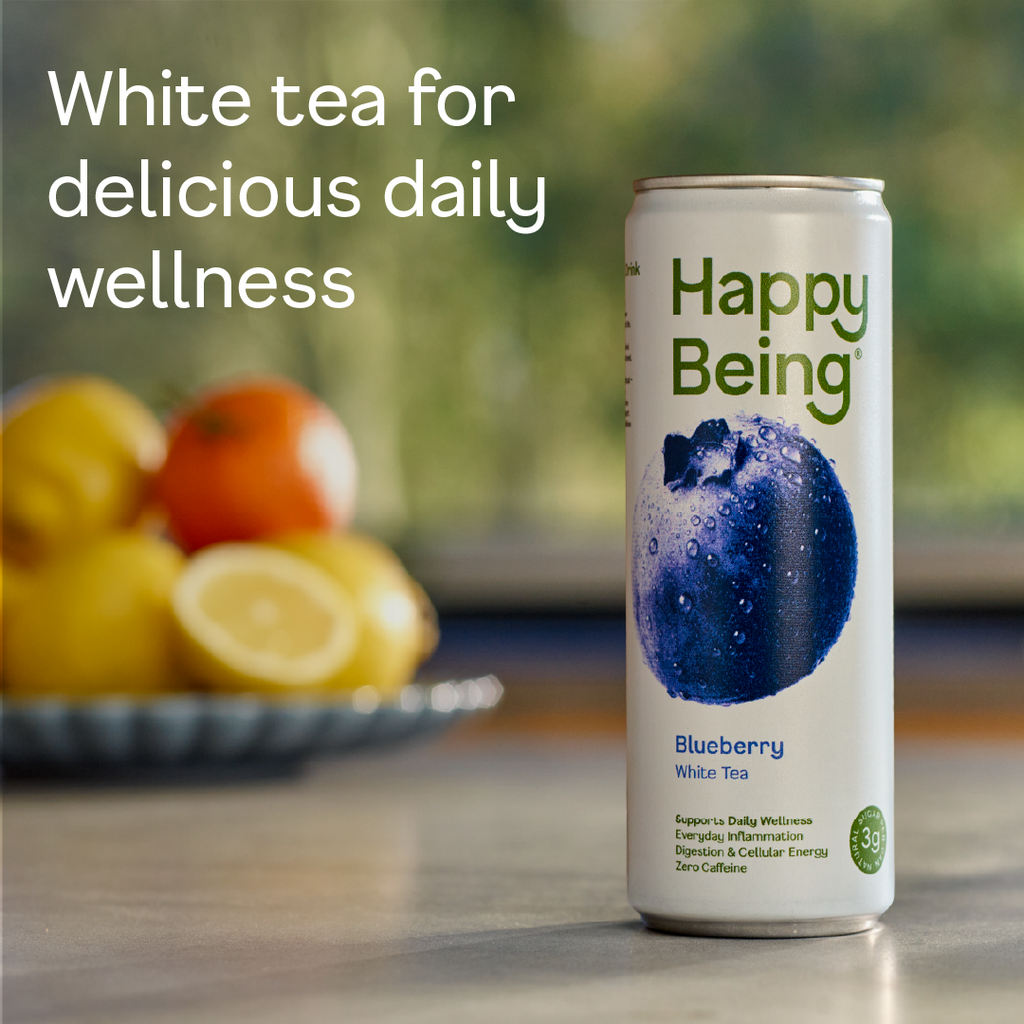
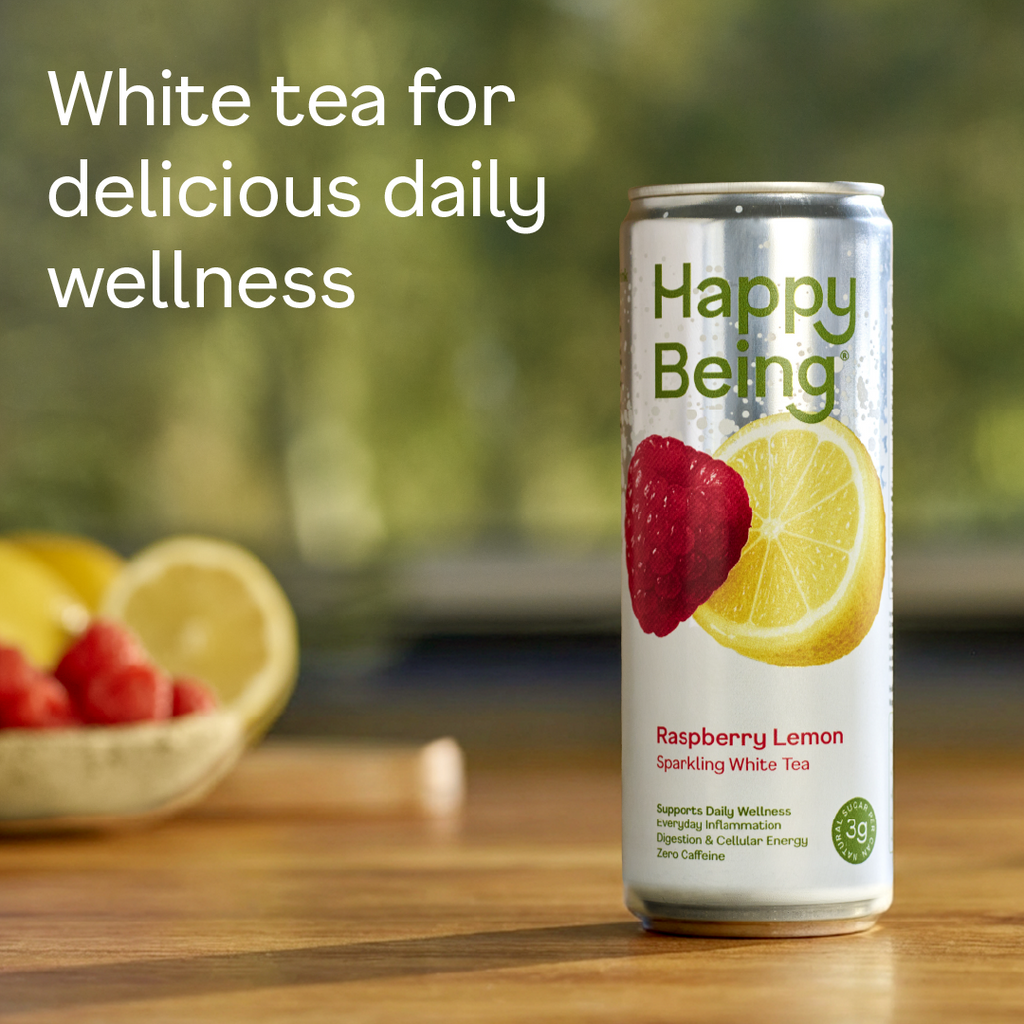
Each can combines bioavailable turmeric using Turmacin®, white tea, elderberry, pterostilbene, and Vitamin C in a light, refreshing drink that fits into real life. No capsules. No powders. No complicated routine. Just a small daily ritual you can reach for when you want something that feels intentional, easy, and enjoyable.
Small choices become powerful when they are easy to repeat, and Happy Being’s White Tea Variety Pack makes that kind of daily consistency feel simple, refreshing, and effortless.
Disclaimer: This article is for general wellness information only and is not intended as medical advice. If you are concerned about alcohol use, withdrawal symptoms, mood changes, or sleep issues, speak with a qualified healthcare professional.