Is White Tea Anti-Inflammatory?

Inflammation gets a dramatic reputation. One minute it's the root of everything wrong with your body. The next, there's a new powder, pill, or cleanse promising to fix it overnight.
The truth is quieter than that — and a lot more manageable.
Here's what most people don't hear enough: some inflammation is actually good. It's your body doing its job — healing a cut, fighting off a cold, responding to stress. The kind of inflammation worth paying attention to is the slow, steady kind that builds up in the background when your daily habits aren't quite supporting your system. Things like what you eat, how well you sleep, and how much stress your body is carrying day to day all play a role. Small, consistent choices add up more than any dramatic reset ever could. That's where white tea comes in — not as a miracle, but as a genuinely smart daily habit backed by real science.
White tea is not a miracle drink. But it is a simple one. Light, easy to sip, and naturally rich in polyphenols. Research suggests those compounds, especially catechins like EGCG, have antioxidant and anti-inflammatory activity. The honest takeaway is not that white tea “treats” inflammation. It may help support a healthier inflammatory response as part of a steady routine.
White Tea vs. Green Tea: What's the Difference?
White tea and green tea come from the same plant, Camellia sinensis. What sets them apart is mostly how they are handled after harvest. White tea is made from young leaves and shoots and goes through the least amount of processing, preserving an abundance of antioxidants. Green tea is also minimally processed, but the method is different. That is why they can taste so different in the cup, even though they start from the same plant.
White tea tends to feel softer and lighter. Green tea is often grassier and more assertive. From a wellness perspective, they belong in the same conversation. Both bring tea polyphenols to the table. Both can fit into a feel-good routine. Green tea has been studied more heavily, but white tea still deserves attention, especially if you want something gentler and easier on your gut to reach for every day.
What the research actually suggests
Tea contains polyphenols, catechins being a type of polyphenol. One of the most talked-about catechins is EGCG. These compounds are studied for their antioxidant activity and their role in pathways related to inflammation and oxidative stress. That does not mean a single can of tea changes everything. It means your daily sip of our white tea can be one supportive piece of a bigger pattern.
White tea is especially interesting because minimal processing helps preserve many of its naturally occurring compounds. Some research reviews describe white tea as rich in antioxidant compounds, with the exact profile varying by leaf, harvest, and brewing method.
So, is white tea anti-inflammatory? In a measured, science-respecting way, yes: research suggests white tea and its polyphenols may help support a healthy inflammatory response. But it is better framed as supportive than curative. That is the language that holds up.
The Wellness Habit That Actually Sticks
Not every wellness habit fails because it is ineffective. Some fail because they are enjoyable. Not delicious. Not fun.
White tea has something going for it that matters more than people think: it is easy. Easy to drink. Easy to enjoy. Easy to repeat.
If a habit feels too intense, too expensive, or too hard to remember, it usually does not last. Consistency does more for long-term wellness than short bursts of effort ever will. This is the same rhythm behind so many good habits: simple enough to keep, pleasant enough to want again tomorrow.
A daily sip that fits real life

This is where we bring it together.
We created Happy Being to make a daily ritual feel easy. Not strict. Not complicated. Just simple support in a drink you will actually want.
Our white tea is crafted with polyphenols and antioxidants, then paired with thoughtfully chosen ingredients that fit naturally into a feel-good routine.
Here is what is inside:
-
Pterostilbene: a blueberry-derived antioxidant often discussed for brain and aging support.
-
Elderberry: a wellness staple commonly used to support immune health.
-
Vitamin C: everyday immune support.
-
Turmeric: a golden spice that helps support a healthy inflammation response.
-
EGCG: a standout tea polyphenol linked to antioxidant and cellular support.
The point is not perfection. It has a simple option on hand that fits the life you already have.
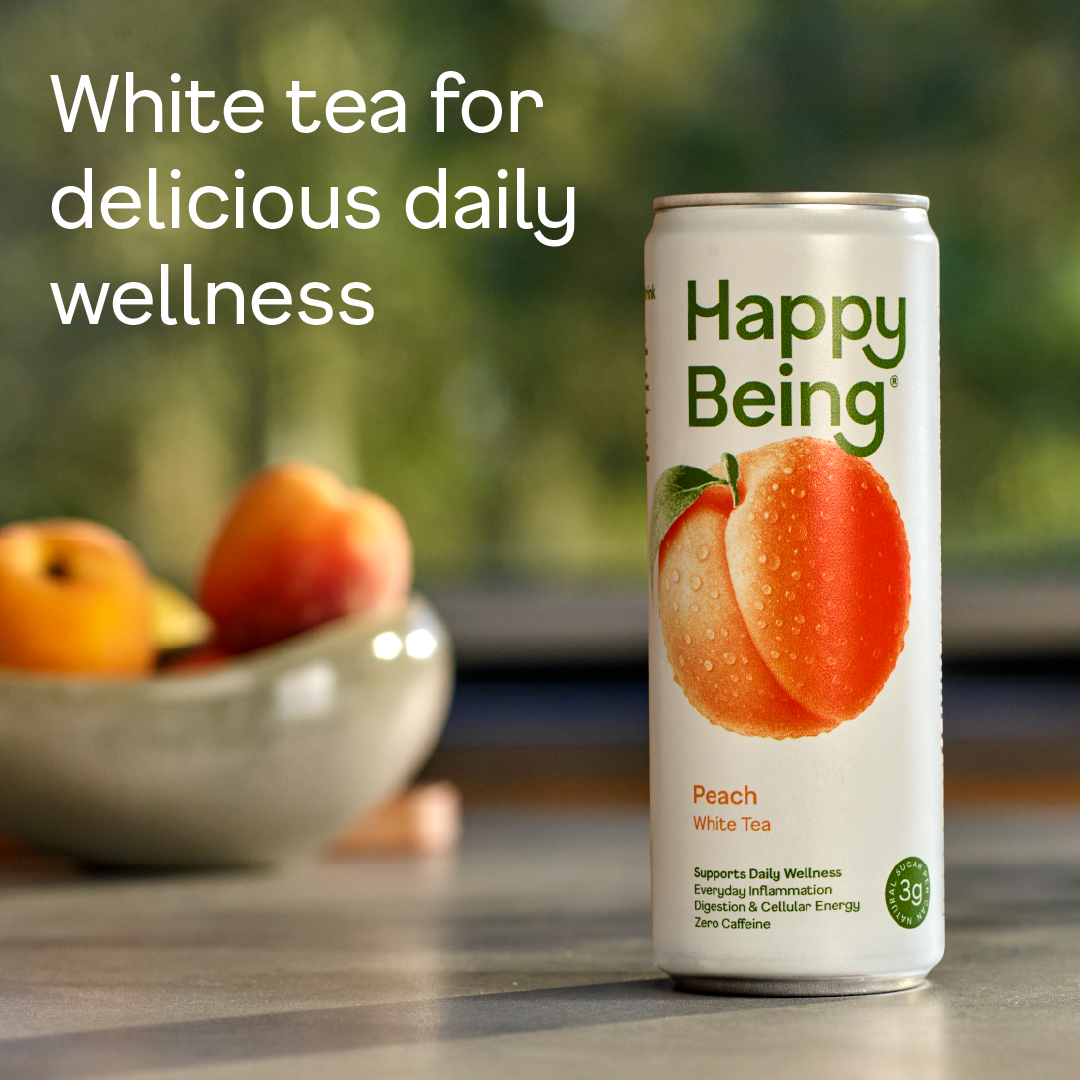


How we like to sip
We like white tea the same way we like most good wellness habits: low pressure.
Chilled in the afternoon. With lunch. In that moment when you want something a little more interesting than water, but do not want a sugar-heavy drink either. It works as a midday reset, not because it does anything dramatic, but because it helps turn a small, supportive choice into something enjoyable.
That is the Happy Being sweet spot. Wellness that feels light enough to keep.
Live well, longer

If you are looking for the most honest answer, here it is.
White tea is not a cure. It is not a shortcut. But it is a smart, gentle drink with compounds that may help support your body’s response to inflammation over time. And when a wellness habit is easy to enjoy, you are much more likely to keep it.
That is what we believe at Happy Being. Small rituals. Better rhythm. Support that feels good to come back to.
Keep it chilled. Sip it often. Let wellness feel a little lighter.
Quick note: This is general wellness information, not personal medical advice. If you have a health condition or specific questions, your clinician is the best person to guide you.
FAQs
Is white tea anti-inflammatory?
Research suggests white tea contains polyphenols and catechins that may help support a healthy inflammatory response. It is best described as supportive rather than curative.
Is white tea the same as green tea?
No. They come from the same plant, but they are processed differently. White tea is made from young leaves and shoots and undergoes very little processing.
Does white tea have EGCG?
Yes. White tea contains catechins, including EGCG, though the exact amount can vary depending on the tea and its preparation.
Can I drink white tea every day?
For many people, yes. White tea can be an easy daily habit to develop. If you are sensitive or have a medical condition, it is worth checking with your clinician.