Caffeine vs. Polyphenols: And Why You Should Swap Your Coffee for Happy Being

Most people do not question their morning coffee. It shows up in the kitchen before anything else does, and that is fine. But if you have ever noticed a late-afternoon slump that will not shake, a night where sleep would not come, or a low-grade jitteriness you have come to accept as normal, it might be worth asking what caffeine is actually doing once it gets inside your body.
Polyphenols are the less-discussed side of this conversation. Found naturally in berries, nuts, leafy greens, and certain teas, they show up in ingredients most people already recognize. What the research says about how they support the brain and body is worth understanding before you pour another cup.
|
|
Caffeine |
Polyphenols |
|
What it is |
A stimulant that blocks adenosine, the chemical that tells your body it's tired |
A group of plant compounds that work with the body's systems instead of overriding them |
|
Common sources |
Coffee, energy drinks, caffeinated tea |
Berries, nuts, leafy greens, and teas like white tea |
|
Effect on sleep |
Can still affect your ability to sleep hours after that morning cup, and heavy use often leads to dependence |
Support the body's natural sleep-regulating mechanisms instead of working against them |
|
Brain & circulation |
Raises heart rate and blood pressure, and around 250 mg can actually constrict blood flow to the brain |
Supports healthy blood pressure and helps keep oxygen-rich blood moving to the brain |
|
Gut & heart health |
Increases stomach acid and can worsen heartburn, nausea, and gut discomfort |
Act as prebiotics that support gut bacteria and the gut-brain connection |
|
The crash |
Borrowed energy that ends in a dip, sometimes with headaches or irritability if you skip it |
Steady support with no crash afterward |
|
Bottom line |
A quick lift that comes with tradeoffs your body pays for later |
Steady support that works with your body instead of against it |
What caffeine does to your brain and body
Caffeine may feel like a simple energy boost, but its effects reach beyond alertness. It can influence sleep, circulation, hydration, digestion, and the way your brain functions throughout the day.
Sleep disruption and dependence
Caffeine works by blocking adenosine, the chemical your body uses to signal tiredness. The result is temporary alertness, but borrowed energy comes with trade-offs. Depending on your metabolism, a morning cup can still be affecting your ability to sleep hours later. For people who drink large amounts regularly, stopping often brings headaches, irritability, and fatigue, the classic signs of physical dependence.
Circulation, focus, and brain blood flow
The jitteriness most people recognize as part of the caffeine experience is commonly mistaken for sharper thinking. Research does not support that idea. The restlessness is real; the focus benefit, largely, is not. Meanwhile, caffeine temporarily raises heart rate and blood pressure, putting the cardiovascular system under strain. A study published in Human Brain Mapping found that around 250 milligrams of caffeine, roughly two to three cups of coffee, can constrict cerebral blood flow. Since the brain uses about 20 percent of the body's total oxygen supply, reduced circulation has a broader effect than it might appear.
Hydration, gut health, and the crash
The brain is approximately 80 percent water, and anything that works against fluid balance affects how well it functions. High caffeine intake can do exactly that, contributing to dips in focus, memory, and mood. A 2021 study in Molecular Psychiatry found that frequent, high consumption of caffeinated products was associated with reduced functional connectivity in brain regions involved in attention, alertness, learning, and emotional regulation. The gut connection matters too: coffee increases acid secretion and can worsen nausea, heartburn, and gut discomfort. Given how tightly the gut and brain communicate, chronic digestive stress is not a neutral issue. Add to that the homocysteine elevation linked to even 200 milligrams of caffeine, an inflammatory marker associated with cardiovascular disease risk, and the daily cost adds up. The crash at the end of it all is just the most visible part.
Taken together, caffeine’s trade-offs are hard to ignore. The lift may be temporary, but the effects on sleep, focus, and balance can last much longer.
What polyphenols do instead

Polyphenols offer steady support rather than short-term stimulation, helping the body maintain steadier energy, better circulation, and balance without causing a crash later.
Sleep, neuroprotection, and clear alertness
Polyphenols work with the body's systems rather than overriding them. Anthocyanins and flavonoids found in berries interact with sleep-regulating mechanisms to support natural sleep cycles. Compounds like resveratrol, found in berries and red wine, exhibit antioxidant and anti-inflammatory properties and are being studied for their potential to slow the progression of neurodegenerative diseases such as Alzheimer's and Parkinson's. Polyphenols from green tea can support alertness and cognitive performance without the jitteriness that caffeine can cause.
Heart health, brain circulation, and the gut
Cardiovascular support is another meaningful difference. Polyphenols help lower blood pressure, reduce LDL cholesterol, and support overall heart function, thereby maintaining a steady supply of oxygen-rich blood to the brain. Cocoa polyphenols in particular have been studied for their ability to enhance cerebral blood flow and promote new blood vessel growth in the brain. Unlike caffeine, polyphenols do not interfere with hydration, and, as prebiotics, they support beneficial gut bacteria and the gut-brain connection that caffeine tends to disrupt.
Brain connectivity and no crash
Research also points to polyphenols enhancing brain functional connectivity and promoting neuroplasticity, strengthening the same pathways that high caffeine intake can wear down over time. There is no crash afterward. The support is steady, not borrowed.
That is what makes the swap meaningful: less borrowed energy, steadier support, and a daily ritual that works with your body rather than against it.
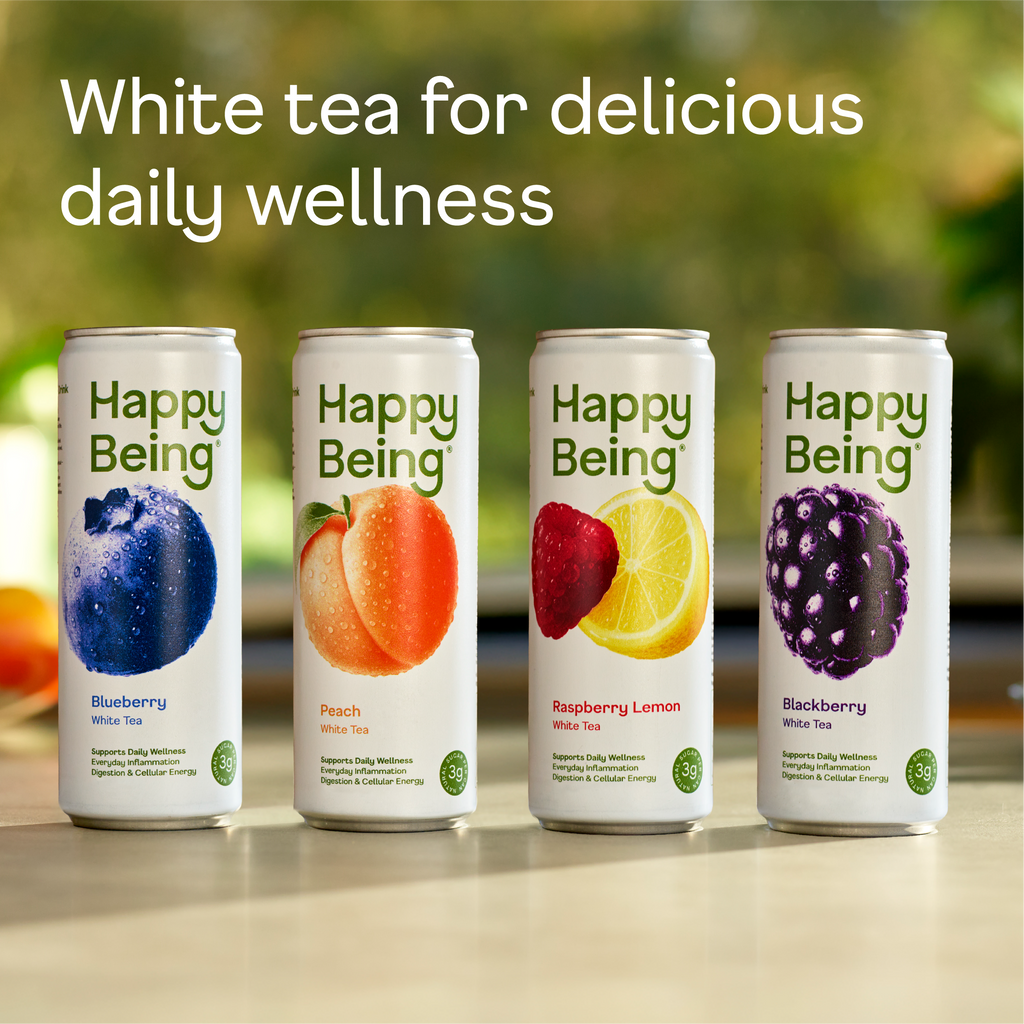
Make the swap that actually supports you

Your daily ritual should do more than push you through the next few hours. Happy Being gives you a cleaner way to show up: caffeine-free, doctor-formulated, and built with white tea polyphenols, EGCG, Turmacin, elderberry, pterostilbene, and 100% daily Vitamin C. Instead of chasing energy and paying for it later with jitters, crashes, or sleep disruption, you get a refreshing drink designed to support your body every day.
Make the switch simple with the Happy Being White Tea Variety Pack and let your next can replace your next cup of coffee.