Why Do Joints Hurt More in the Morning?

That slow, achy feeling when you first get out of bed. Stiff knees, tight hips, fingers that don't quite want to cooperate. A lot of people write it off as just part of waking up, assume it's age doing its thing, and move on. But morning joint discomfort is worth paying attention to. There are real reasons it happens, and understanding them makes it easier to actually do something about it.
In this blog, we’ll explain why joints often feel stiffer in the morning, when that discomfort may require medical attention, and which daily habits can help ease movement.
What's actually happening in your joints overnight
When you sleep, your body stays still for hours. Synovial fluid, the thick liquid that cushions and lubricates certain joints, remains present throughout the night. However, several hours without regular movement can leave your joints feeling temporarily less mobile when you wake up.
During the day, walking, stretching, and shifting position keep your joints moving through their normal range of motion. After a long period of inactivity, they may need a little time to loosen up again. The result is that familiar morning stiffness that gradually eases once you begin moving.
The most common reasons for morning joint pain
 SEO Cube
Overnight inactivity is the biggest factor, but it works alongside several others. Inflammation tends to build while the body is at rest, partly because you aren't moving and partly because your body temperature drops during sleep, which further slows circulation.
Sleep position matters more than most people realize. Spending hours with a joint compressed or bent at an awkward angle can leave it tight and sore by morning. Shoulders, hips, and knees tend to be most sensitive to this.
When it might be more than just stiffness
Brief stiffness that eases soon after you start moving is common and often manageable. However, morning stiffness lasting longer than 30 minutes, particularly when accompanied by swelling, warmth, tenderness, or significant pain, warrants closer attention.
Prolonged morning stiffness can occur with inflammatory conditions such as rheumatoid arthritis, while joint discomfort may also have several other possible causes. If your symptoms are worsening or affecting your daily function, talking to a healthcare provider is the right step. Listening to those signals early can help you understand what is happening and find the appropriate support.
How your body's internal clock plays a role
Your circadian rhythm does more than regulate sleep. It also shapes how your body manages inflammation throughout the day. Cortisol, a hormone that helps keep the body's inflammatory response in check, naturally dips to its lowest point in the early morning hours before rising again as you wake.
That dip means your body's anti-inflammatory capacity is at its weakest right when you're getting up. It's one reason joint discomfort often feels most noticeable first thing in the morning, even when the underlying cause is mild. The timing isn't random.


Simple morning habits that can help ease stiffness
You don't need a complicated routine. A few small, consistent habits can make mornings feel noticeably different over time.
Try gentle movement before you even get out of bed. Rotating your ankles, flexing your fingers, and slowly bending your knees. It gives your joints a chance to warm up gradually. A warm shower shortly after waking encourages circulation and eases tightness in a way that feels immediately good.
Hydrating first thing directly supports joint health, since water plays a key role in synovial fluid production. Keeping consistent wake times also helps stabilize your circadian rhythm, which in turn helps regulate how your body handles inflammation through the night.
How daily consistency supports joint comfort over time
One good morning does not shift much. What changes things is making the same supportive choices day after day until they no longer feel like an effort and become a habit.
Certain ingredients are commonly used to support joint comfort as part of a daily wellness routine. Given that your body's own anti-inflammatory capacity is at its lowest right around wake-up, as the morning cortisol dip described earlier shows, supporting that response through diet is particularly relevant at this time of day.
Turmeric, particularly in a bioavailable form the body can absorb, is one of the most researched options for supporting the body’s natural inflammatory response, the same overnight inflammatory buildup described earlier as one of the main reasons joints feel stiffer at wake-up. Vitamin C supports collagen production, and collagen is an essential component of connective tissue throughout the body.
Organic white tea also contains polyphenols that can support the body’s natural inflammatory balance as part of a consistent wellness routine. Elderberry and pterostilbene add further antioxidant support, complementing the other ingredients. Readers interested in how these plant compounds work can learn more about polyphenols and antioxidant support.
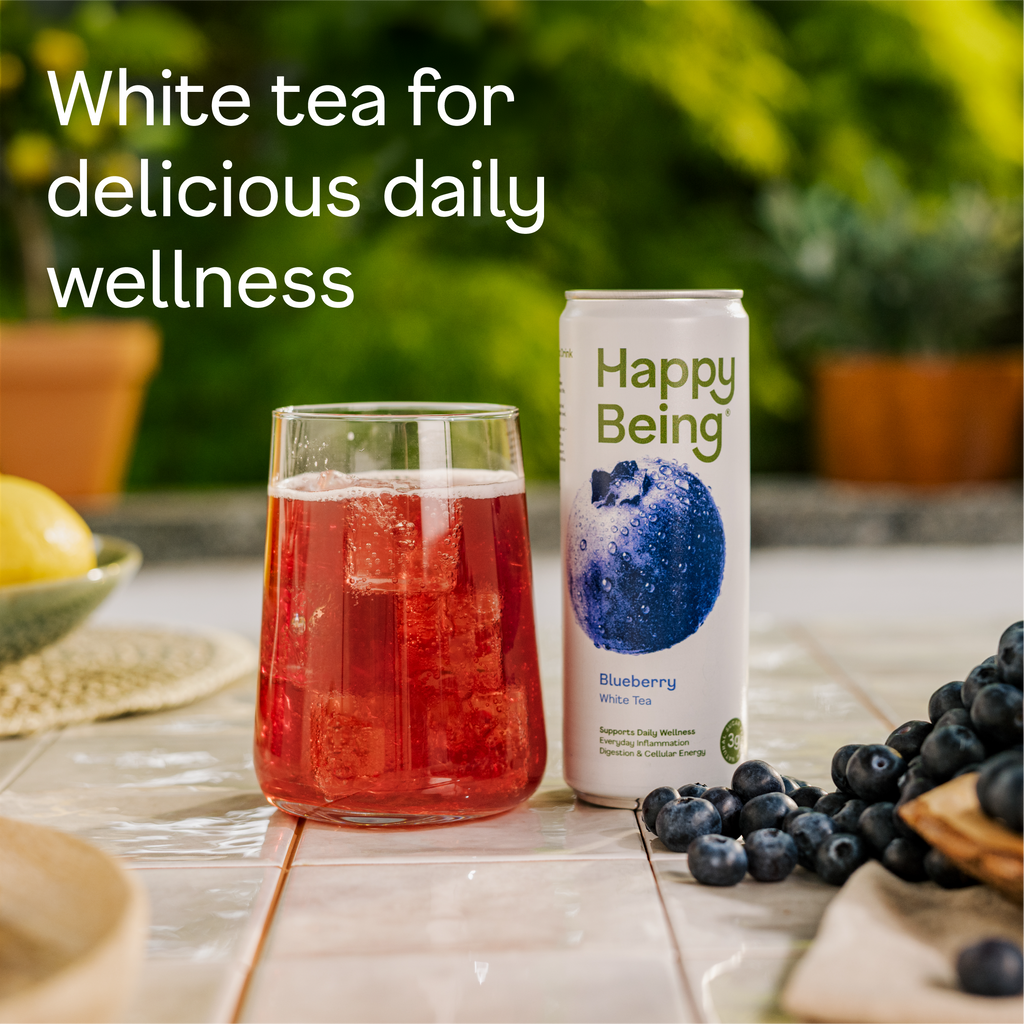
Bioavailability matters here. An ingredient your body cannot absorb well offers limited value, regardless of the dose on the label. Happy Being combines Turmacin®, a bioavailable form of turmeric, with Vitamin C, elderberry, pterostilbene, and organic white tea in a light, easy-to-drink can. It also counts toward the morning hydration habit already flagged above, which directly supports synovial fluid.
It fits into your morning the way a good habit should, without adding anything complicated to your day.
FAQs
Is morning joint stiffness normal?
Short-term stiffness that eases once you start moving is common and generally not a cause for concern. If it consistently lasts longer than 30 minutes, or comes with swelling or significant pain, it's worth discussing with a healthcare professional.
Does diet affect morning joint pain?
Diet plays a real role. Foods high in refined sugar and processed fats may contribute to inflammation over time. Nutrients like Vitamin C, omega-3 fatty acids, and antioxidant-rich foods are commonly linked to joint support and overall inflammatory balance. As with most inflammation-related habits, what you do consistently matters more than any single day's choices.
Can staying hydrated help with joint stiffness?
Yes. Water is a key component of synovial fluid, which cushions your joints. Starting your morning with a glass of water and staying hydrated throughout the day is one of the simplest habits you can build to consistently support joint comfort.
Build a Morning Routine Your Body Can Count On

Joint comfort is supported by the choices you repeat, from gentle movement and restorative sleep to the ingredients you make part of your day. Happy Being brings organic white tea, Turmacin® bioavailable turmeric, elderberry, pterostilbene, and Vitamin C together in one light, refreshing drink designed for consistent antioxidant, immune, and everyday wellness support.
Make supportive ingredients easier to keep in your routine by exploring Happy Being’s white tea blends.
Disclaimer: This article is for general wellness information only and is not intended as medical advice. If you are experiencing persistent or severe joint pain, please consult a qualified healthcare professional.