Why Do I Feel Older Than My Age? The Inflammation Answer

Some mornings you move slower than you expect to. You stretch, and something in your back or knees resists. You get through the day fine, but there's a heaviness that doesn't match the number on your last birthday cake.
Maybe you sleep a full eight hours and still wake up tired. Maybe your focus slides around three in the afternoon, or your body needs an extra day to recover from a normal workout. Nothing about it is dramatic. It's a quiet sense that you feel older than your years suggest.
Your age on paper doesn't always match how you feel inside. When those two drift apart, it usually points to something worth paying attention to. In this blog, we’ll explore why you may feel older than your age and how sleep, stress, movement, nutrition, and inflammation can shape how you feel each day.
What it really means to feel older than your age
When you feel older than your age, you're noticing a gap between the calendar and your body. You're the same age you were last month, yet you feel worn down in ways that don't add up.
The signals tend to be small. Energy that never fully returns. Stiffness when you stand up from the couch. Recovery that drags on longer than it used to. Any one of these is easy to shrug off. Together, they tell a story.
If you've ever thought "why do I feel so old," you're in good company. That question comes up more than most people admit out loud. Feeling worn down isn't a personal failing. It's a signal your body sends, and it's worth listening to.
The quiet role of inflammation and aging
Inflammation carries a bad reputation, but in short bursts it works for you. When you nick your finger or fight off a cold, inflammation shows up, does its job, and settles back down. That response keeps you healthy.
The trouble starts when low-grade inflammation lingers in the background across months and years. It never spikes hard enough to notice, so it sits there quietly.
This is where inflammation and aging meet in daily life. Steady, low-level inflammation can affect how your body recovers, how your joints feel, and how much energy you have to spare. Because it moves so slowly, it often goes unnoticed for years while shaping how old you feel.
Everyday things that quietly speed up how old you feel

Most of what wears you down comes from ordinary habits, not big events.
Poor sleep gives your body less time to repair, so recovery slows and fatigue stacks up. Chronic stress keeps cortisol elevated, which adds to the daily load your body carries.
Your diet plays a part too. Meals heavy in processed food add to that background strain. And sitting too much while skipping movement lets stiffness settle in and energy drain away.
Signs your body may be sending you
Your body has quiet ways of telling you something's off.
You might feel persistent fatigue that rest doesn't fix. Joint stiffness and slower bounce-back after activity show up too. Brain fog and dips in focus can creep in through the afternoon.
You may also notice shifts in your skin, your mood, or your energy that make you feel older than your age. Spotting these is a helpful first step, not a reason to panic.
Small daily habits that help you feel more like yourself
The good news is that small, steady habits help you feel more like yourself again.
Start with consistent, quality sleep, since that is when your body does most of its repair work. Add gentle daily movement, a walk or a few stretches, instead of pushing into intense routines you will quit by Thursday.
Fill your plate with more whole, colorful foods. And handle stress with small, repeatable moments, a few slow breaths or a quiet pause, rather than waiting for one big reset.
Why consistency matters more than intensity
The habits that help most are the ones you can keep. A short walk every day supports you more than one long workout you dread and skip.
Steady support beats occasional big efforts because your body responds to what you do repeatedly. When a routine feels easy instead of heavy, you stay with it. That's what makes the difference over time.
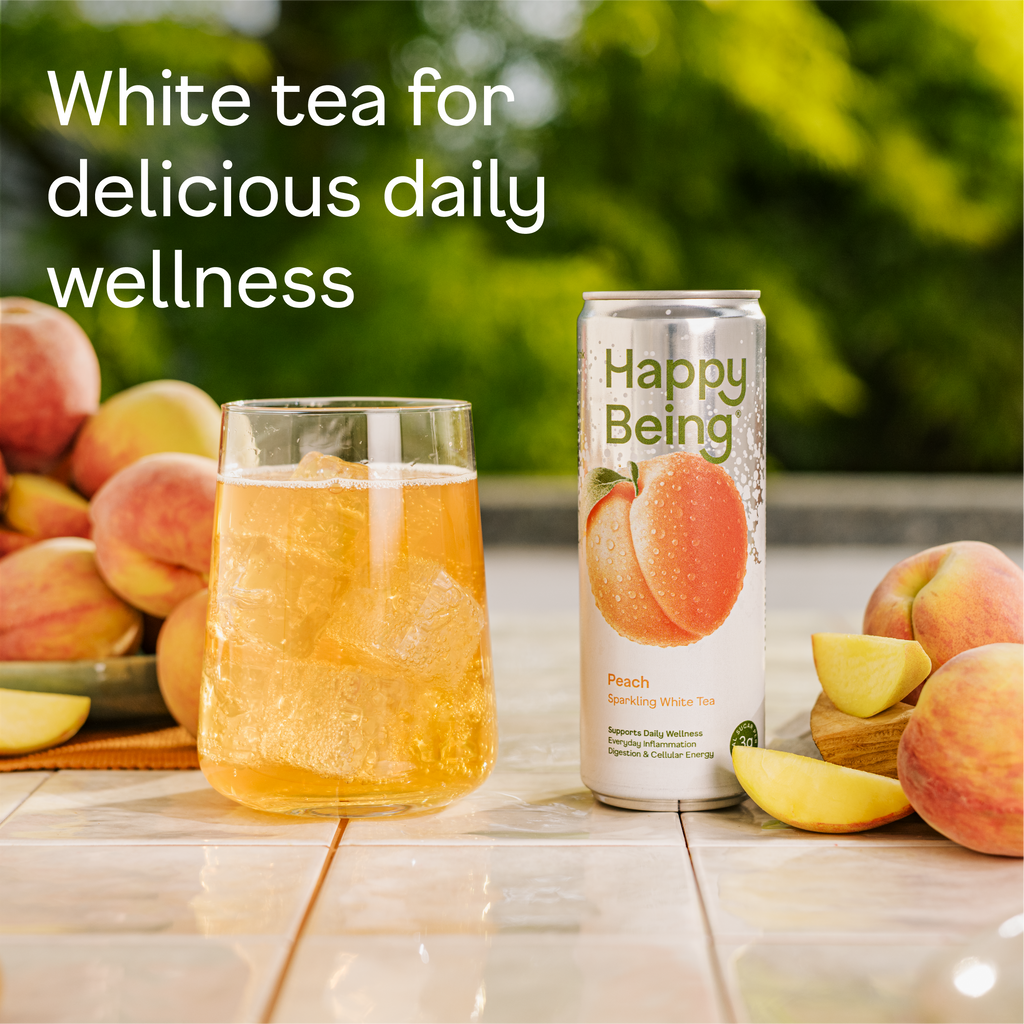
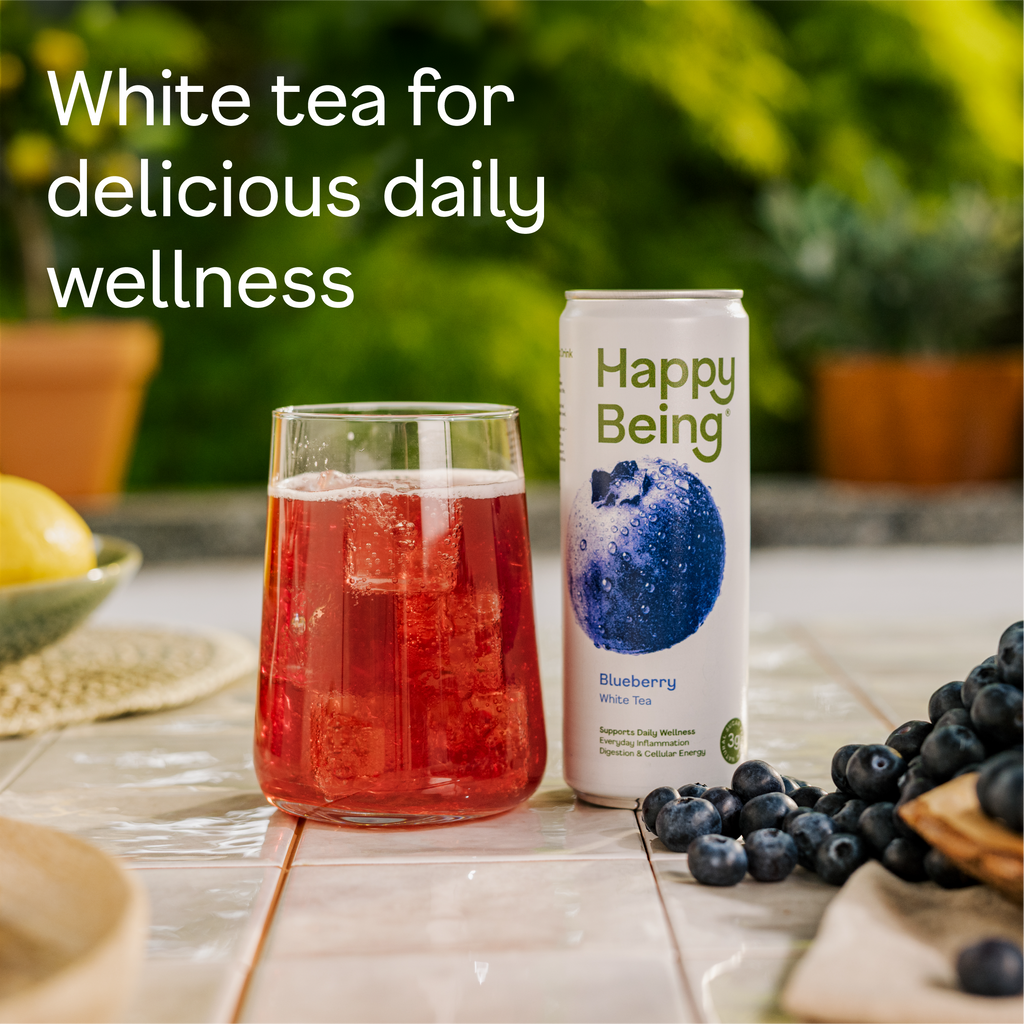
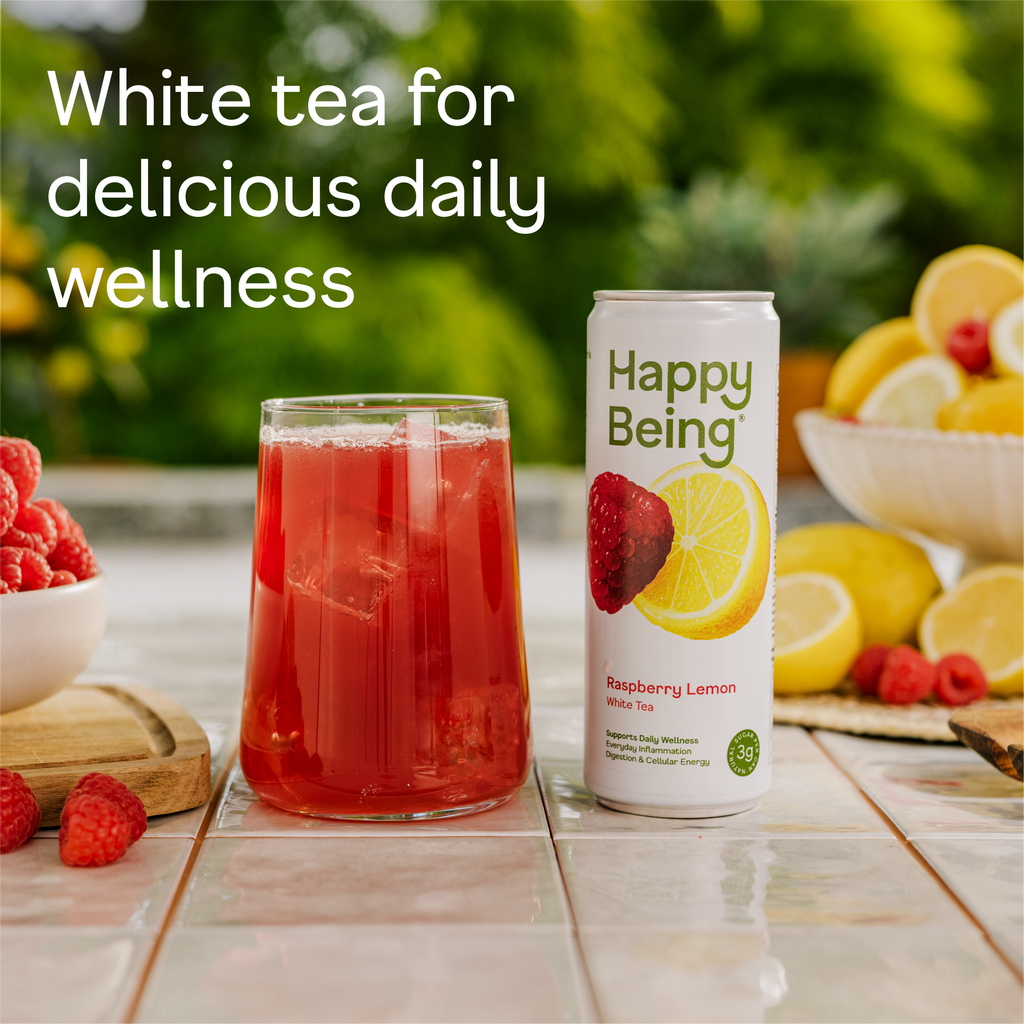
Ingredients commonly used to support your body over time
Some ingredients are commonly used to support your body as part of a daily routine.
Bioavailable turmeric, in the form of Turmacin®, is designed to support your body’s natural inflammatory response, and it is easier for your body to absorb. Organic white tea brings a light, gentle profile with antioxidant support.
Elderberry and Vitamin C are familiar helpers many people already know and reach for. Pterostilbene fits in as another supportive ingredient for everyday wellness.
Absorption matters here. An ingredient only helps when your body can take it in and use it, which is why the format you choose is as important as the ingredient itself.
How a simple daily ritual fits into real life
A light, drinkable format feels easier to keep than one more thing to remember. You don't have to mix a powder, down a shot, or add another capsule to your morning.
Happy Being fits into an ordinary day. It's a refreshing can you reach for because you want to, which is what makes consistency realistic.
That turns support into a small ritual instead of a project. And a habit you enjoy is a habit that sticks around.
Feeling older than your age isn't a fixed state. Small steps add up, and your body responds to steady care.
Pick one easy habit to start with today, whether that's a short walk, an earlier bedtime, or a simple daily ritual you look forward to.
FAQs
Why do I feel so old even though I'm young?
Feeling older than your age often comes from everyday factors like poor sleep, stress, and low-grade inflammation building up quietly over time, rather than your actual age.
Can inflammation really affect how old I feel?
Lingering low-grade inflammation can influence energy, recovery, and joint comfort, all of which shape how old you feel day to day.
What small habits help most day to day?
Consistent sleep, gentle movement, colorful whole foods, and small stress-managing moments tend to help most, mostly because you can keep them.
How long before daily habits start to feel different?
It varies for everyone, but consistency over a few weeks matters more than intensity in a single day.
Feel More Like Yourself Every Day

Feeling worn down does not mean you need to rebuild your entire routine. Start with a few choices you can repeat, such as better sleep, regular movement, colorful foods, and a refreshing drink that supports your everyday wellness goals.
Happy Being combines organic white tea, Turmacin® bioavailable turmeric, elderberry, pterostilbene, and Vitamin C in an easy format that fits naturally into real life. Take one simple step toward a routine you can maintain by exploring Happy Being’s white tea blends.
This article shares general wellness information and is not medical advice. Talk with your healthcare provider about your individual needs.