What Causes Chronic Inflammation in the Body?

Your body is trying to protect you; that is what inflammation is designed to do. But sometimes that protective response does not switch off the way it should, and the slow, ongoing version can quietly affect how you feel day to day. Understanding what triggers it is the first step toward doing something about it.
There is a real difference between inflammation that helps and inflammation that lingers. The helpful kind shows up, does its job, and fades. The harmful kind stays in the background, often without obvious symptoms, slowly affecting how your body functions. Many people live with it for years without ever connecting it to how they feel.
This article walks through the most common causes of chronic inflammation, the signs to watch for, and the daily habits that can genuinely help.
What is chronic inflammation?
Acute inflammation is your immune system’s response to an injury, infection, or other potential threat. You get a cut, your body sends resources to the area, and healing begins. The response is short, targeted, and purposeful.
Chronic inflammation works differently. Instead of activating and resolving, your immune system stays switched on at a low level for weeks, months, or longer. It is not responding to a clear threat. It simply is not standing down. Over time, that sustained immune activity can affect tissues and systems throughout the body.
What makes it harder to detect than acute inflammation is that there is often no obvious trigger and no dramatic symptom. It tends to show up gradually as fatigue, discomfort, or changes that are easy to blame on something else entirely.
The most common causes of chronic inflammation in the body
Chronic inflammation rarely comes from a single source. More often, it develops through everyday habits and exposures that keep the immune system activated over time.
A diet high in processed foods and added sugar.
Ultra-processed foods are among the most well-documented causes of inflammation in the body. They often contain refined sugars, seed oils, and additives that can trigger an ongoing immune response, particularly in the gut. Refined sugar plays a specific role in inflammatory signaling, contributing to elevated markers over time. Foods most commonly linked to higher inflammation include white bread, packaged snacks, fast food, sugary drinks, and heavily processed meats.
Chronic stress
Prolonged stress keeps cortisol levels elevated. In short bursts, cortisol helps manage inflammation. When stress becomes ongoing, the immune system can become dysregulated, and that natural balance breaks down. Both mental and physical stress contribute to this, which is why emotional burnout and physical overtraining can show up in your body in surprisingly similar ways.
Poor sleep habits
Sleep is when your immune system resets. When you consistently get too little of it, or when the quality is poor, inflammatory markers tend to rise. Research connects sleep deprivation with increases in inflammatory molecules, including cytokines, interleukin-6, and C-reactive protein. Good sleep is not optional for immune regulation. It is foundational to it.
A sedentary lifestyle
Regular movement helps your body regulate its inflammatory response. Research suggests that inactivity is independently associated with higher inflammation levels, separate from diet or weight. You do not need intense exercise. Consistent, moderate movement throughout the week is what supports a healthier baseline.
Excess body weight
Adipose tissue, particularly around the abdomen, produces pro-inflammatory compounds called cytokines. Excess body weight can actively contribute to ongoing low-grade inflammation. It also creates a cycle where inflammation makes weight management more difficult, reinforcing both issues over time.
Environmental and lifestyle exposures
Tobacco, alcohol, and air pollution are all recognized causes of chronic inflammation. Each can trigger an immune response on its own. When exposure is repeated and low-level, as it often is, the effects accumulate quietly rather than announcing themselves with obvious symptoms.
Understanding these common triggers can help you identify which daily habits may be contributing and where small, consistent changes could make the greatest difference.


Signs your body may be dealing with chronic inflammation
Chronic inflammation rarely announces itself clearly. The signs tend to be subtle and easy to dismiss.
-
Persistent fatigue that does not improve with rest
-
Ongoing joint discomfort, puffiness, or stiffness
-
Digestive irregularities or unexplained skin changes
These are easy to attribute to stress, aging, or a busy life. That is part of what makes chronic inflammation so easy to overlook. If any of these feel familiar and persistent, they are worth taking seriously rather than normalizing.
How your daily habits shape your inflammation levels

Daily habits carry more weight than occasional big efforts in the cause of chronic inflammation. A weekend of clean eating does not undo months of inflammatory patterns, but small, consistent choices do add up in a meaningful way.
Anti-inflammatory foods worth building into your routine include leafy greens, berries, fatty fish, nuts, and olive oil. These are not specialty ingredients. They are straightforward additions to meals you already eat.
Hydration, movement, and sleep are the three most foundational daily habits for keeping inflammation in check. They are not dramatic, but they work, especially when you do them consistently rather than perfectly. Consistency matters more than perfection here. For a broader look at how these habits work together, explore Happy Being’s guide to everyday immune support.
Something as simple as what you reach for when you are thirsty matters here too: swapping a sugary drink for a lower-sugar, hydrating option is one of the easiest changes to make consistently, since it touches both the hydration habit and the added-sugar cause at once.
Ingredients that may help support a balanced inflammatory response
Alongside food and lifestyle habits, certain ingredients are commonly used for their ability to support the body’s natural inflammatory response.
Turmeric is one of the most researched, particularly for joint discomfort and stiffness that often signal ongoing low-grade inflammation. Its active compounds have a strong body of evidence behind them, but bioavailability matters. Your body actually needs to absorb it for it to do anything useful. Elderberry and Vitamin C are well-known for everyday immune support. Pterostilbene and organic white tea provide antioxidant support, which is particularly relevant given how much environmental exposure, tobacco, alcohol, and pollution contribute to inflammation through oxidative stress.
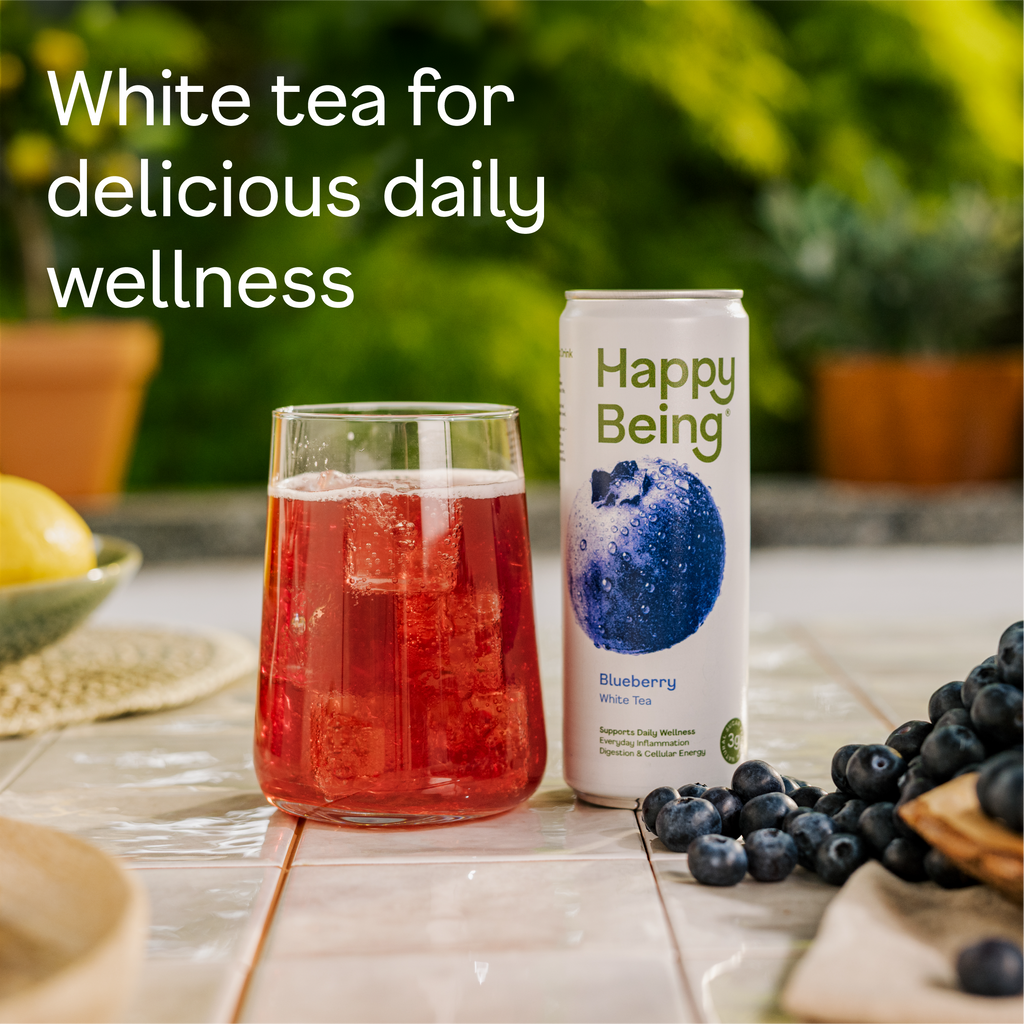
These ingredients work best as part of a consistent daily habit. That is where Happy Being fits in naturally. Each can combines bioavailable turmeric through Turmacin®, elderberry, Vitamin C, pterostilbene, and organic white tea in a light, refreshing drink that is easy to reach for every day. No powders, capsules, or complicated routine required. It is a simple ritual that makes ingredient-based support feel genuinely doable and doubles as your hydration habit rather than adding another step to your day.
A note on when to talk to your doctor
If your symptoms are persistent, worsening, or affecting your daily life, that is worth a conversation with your doctor. Inflammation markers can be checked through routine bloodwork, giving you a clearer picture of what is actually happening in your body.
Lifestyle support works best alongside professional guidance, not instead of it. If something has felt off for a while, getting that input is the right move.
FAQs
Can chronic inflammation exist without obvious symptoms?
Yes. It may develop gradually and cause subtle symptoms such as fatigue, joint discomfort, or digestive changes rather than clear swelling or pain.
How do doctors test for chronic inflammation?
Blood tests such as C-reactive protein (CRP) and erythrocyte sedimentation rate (ESR) can detect inflammation, but further evaluation is needed to identify its cause.
Can chronic inflammation be reduced naturally?
Balanced nutrition, regular movement, sufficient sleep, stress management, and avoiding tobacco may help, though medical treatment may be necessary if an underlying condition is present. Building these into a routine you can actually stick with, rather than treating them as occasional efforts, tends to matter more than any single change.
Turn Daily Support Into a Habit That Sticks

Chronic inflammation is shaped by the patterns you repeat, so meaningful support should be easy to incorporate into everyday life. Happy Being brings organic white tea, Turmacin® bioavailable turmeric, elderberry, pterostilbene, and Vitamin C together in a refreshing, ready-to-drink ritual designed to support your body’s natural inflammatory balance without powders, capsules, or extra preparation.
Start turning better intentions into a daily choice you can genuinely maintain by exploring Happy Being’s white tea blends.
Disclaimer: This article is for general wellness and informational purposes only. It is not intended as medical advice. If you have concerns about inflammation or any health condition, please consult a qualified healthcare provider.