What Is "Inflammaging" and Why Do People Talk About It?

You wake up stiffer than you used to. Your energy dips earlier in the afternoon than it did a few years ago. Nothing feels wrong, but some days you feel older than your years. If that sounds familiar, there's a word for part of what might be going on.
Lately, "inflammaging" keeps turning up in wellness conversations, podcasts, and articles about feeling good long-term. It sounds technical. The idea behind it is simple once you break it down.
Here you'll learn what inflammaging means, why people talk about it, and a few easy habits that help support a calmer, steadier you.
What inflammaging actually means
Inflammaging describes low-grade, long-term inflammation that builds up slowly over the years. It's not the sharp, obvious kind you feel after an injury. It sits quietly in the background.
The word blends "inflammation" and "aging" because researchers noticed the two often move together. As the years pass, a gentle inflammatory hum tends to rise, and that steady presence is what the term points to.
How everyday inflammation differs from the helpful kind
Short-term inflammation is your body doing its job. When you scrape your knee or fight off a cold, inflammation shows up as a repair signal, then switches off once the work is done.
Inflammaging works differently. It happens when that signal stays switched on at a low level, long after any repair is needed. Because it's quiet, chronic inflammation often feels invisible.
You might recognize it in small ways. Joints that feel less springy. Skin that looks tired. Focus that fades faster than it once did. None of these are dramatic, which is why the pattern is easy to miss.
Why inflammaging connects to how you age
Researchers link ongoing inflammation to the aging process because it seems to influence how the body maintains itself over time. When that low-level activity stays elevated, it can touch many systems at once.
The areas people notice most include energy, joints, skin, and focus. These are the everyday things that shape how young or old you feel.
That's why inflammation and the aging process get so much attention in long-term wellness. It's less about any single moment and more about the steady load your body carries.
Why everyone seems to be talking about it now

Longevity and healthy-aging conversations have grown fast. More people care about feeling good for decades, not chasing a quick reset.
Simple biomarkers and at-home tests have made inflammation feel more real and measurable. When you can see a number, an abstract idea turns into something you can pay attention to.
There's a bigger shift too. People are trading quick fixes for daily habits, picking small, steady choices over intense one-time efforts.
What can quietly nudge inflammaging along
A few common factors tend to keep that low-level signal running. Ongoing stress and poor sleep are two of the biggest. Highly processed foods and long stretches of low movement can add to it.
Some of it is simply natural. Changes that come with age play a role no matter how carefully you live.
None of this means you're failing at wellness. These are adjustable factors, and small shifts in any one of them can help.
Small daily habits that help support balance
Inflammaging isn’t shaped by one dramatic choice. It responds to the small things you repeat, from what you eat to how you move, rest, and support your body each day.
Eating more colorful, whole foods
Filling your plate with a range of produce, healthy fats, and omega-3 sources gives your body steady, gentle support. Berries, leafy greens, olive oil, and fatty fish are foods commonly used to support a calmer inflammatory load.
Moving, resting, and managing stress
Gentle, regular movement tends to serve you better than occasional intense bursts. A daily walk counts.
Sleep quality acts as a daily reset, giving your body time to settle. Pair that with simple stress-easing rituals you can keep, like a few slow breaths or a quiet cup of tea.
Ingredients often used for daily support
Certain ingredients are commonly used to support the body's natural balance. Turmeric and bioavailable forms like Turmacin® are widely studied for supporting a healthy inflammatory response.
Organic white tea, elderberry, pterostilbene, and Vitamin C are also chosen for their supportive properties. What matters most isn't intensity. It's consistency, showing up in small ways day after day.


Making support feel like a simple ritual
The habits that help are the ones you keep. An easy-to-drink format helps here, because it fits into a day you're already living rather than adding another step to remember.
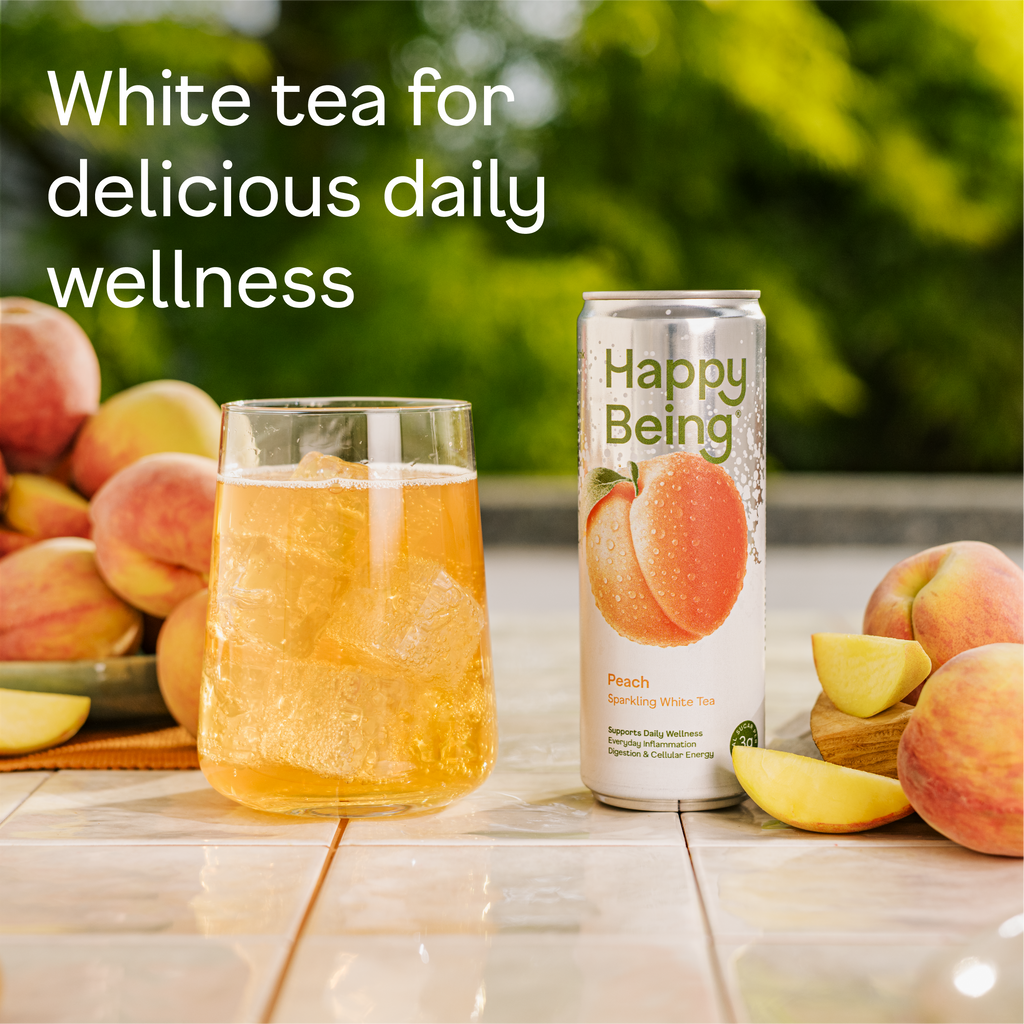
Happy Being was designed with that in mind. Each light, refreshing can brings together bioavailable turmeric, organic white tea, elderberry, pterostilbene, and Vitamin C in a format you reach for because you enjoy it.
That's the whole idea. Small, enjoyable habits instead of complicated wellness projects. As always, this is general wellness information, not medical advice, so check with your healthcare provider about what fits your needs.
FAQs
At what age does inflammaging start?
There's no single starting line. Low-grade inflammation tends to build gradually, and many people begin thinking about it in their thirties and forties. There's no reason to feel alarmed by the timing.
Can you feel inflammaging?
Not directly, but you might notice subtle everyday signs like lower energy, stiffer joints, or slower focus. These are gentle cues, not certainties.
Can small habits really make a difference?
Yes. Consistency tends to matter more than intensity. Realistic, repeatable choices add up quietly over time, which is what makes them worth keeping.
Turn Daily Support Into a Habit You Keep

Inflammaging is shaped over time, so meaningful support should be simple enough to repeat every day. Happy Being brings organic white tea, Turmacin® bioavailable turmeric, elderberry, pterostilbene, and Vitamin C together in a refreshing format that fits naturally into your routine. No complicated preparation. No powders or capsules to remember.
Make consistent wellness support one of the easiest choices in your day by exploring Happy Being’s white tea and polyphenol blends.