Skin from the Inside Out: How Vitamin C-Rich Citrus Supports Collagen & Skin Health

You catch your reflection and wish for skin that looks a little calmer, a little brighter, generally healthier. Most of us chase that wish through what we smooth on top.
Skincare lives on the outside. Serums, creams, masks- they all have their place. But your skin takes shape from within too, built by what you eat, how much water you drink, and the small things you repeat every day. That is why vitamin C for skin belongs in your daily routine, not only on your bathroom shelf.
Why your skin reflects what happens inside
Your skin is a living organ, and it quietly mirrors how the rest of you is doing. Sleep well, drink enough water, eat a varied diet, and your skin tends to show it. When life gets busy and meals get repetitive, your complexion tends to show that too.
What you eat and how your skin looks are closely tied. The nutrients you take in support the way your skin feels over time. So lasting skin support comes from more than the bottles on your counter. The habits you build into ordinary days matter as much, often more.
What vitamin C actually does for your skin
Vitamin C is an antioxidant. It helps protect your skin from the everyday stresses of sun, pollution, and general wear. Antioxidants work with your body's natural defenses to help keep things steady.
It also helps support a healthy, resilient complexion. These vitamin C skin benefits show up gradually, working alongside your daily habits rather than in one dramatic moment. The steadier your intake, the more it can support you.
The vitamin C and collagen connection
Collagen is the protein that gives your skin its firmness and structure. As years pass, natural collagen levels shift, which is part of why skin changes.
This is where vitamin C earns its reputation. It supports your body's natural collagen production, making it a meaningful part of skin-focused nutrition. For vitamin C and collagen production, steady intake matters more than the occasional big effort. Your body uses vitamin C throughout the day, so a little each day tends to serve your skin better than a lot once in a while.
Why citrus is a naturally easy source

Oranges, lemons, grapefruit. These are some of the most familiar vitamin C sources around, and easy to enjoy. A piece of citrus with breakfast or a squeeze of lemon in your water adds up over a week.
Citrus gives you more than vitamin C on its own. It also carries citrus bioflavonoids, plant compounds commonly used to complement vitamin C. That is a good reminder that whole foods hand you a fuller picture than single-nutrient thinking. You get the vitamin and its natural companions in one bite.
Dietary vitamin C vs. topical: how they differ
Topical vitamin C serums support your skin's surface where you apply them. Dietary vitamin C supports your skin from within, feeding the processes that keep your complexion resilient.
The good part is that inside-out and outside-in can work together. One does not cancel the other. What shapes real results is form and consistency. A serum you skip or a food you forget, will not do much, so choosing habits you can keep is what makes the difference.
Simple daily habits that support skin from within
Small food swaps worth keeping
You do not need to rebuild your diet. Adding citrus and colorful produce to meals you already eat is enough to start. Drop berries into breakfast, add peppers to lunch, keep an orange nearby for the afternoon.
Water matters too. Drinking enough helps support skin comfort and works with the nutrients you take in. Small, repeatable choices tend to serve your skin well.
Consistency over intensity
Occasional big efforts rarely stick. Small daily rituals do. A steady habit you enjoy will support your skin far more than an intense routine you drop after a week.
The goal is to make skin support feel realistic and even enjoyable. When a habit slots naturally into your day, you keep it, and that consistency is what turns good intentions into something your skin can benefit from over time. The same steady approach matters when thinking about healthy aging.
An easy way to make vitamin C a daily ritual

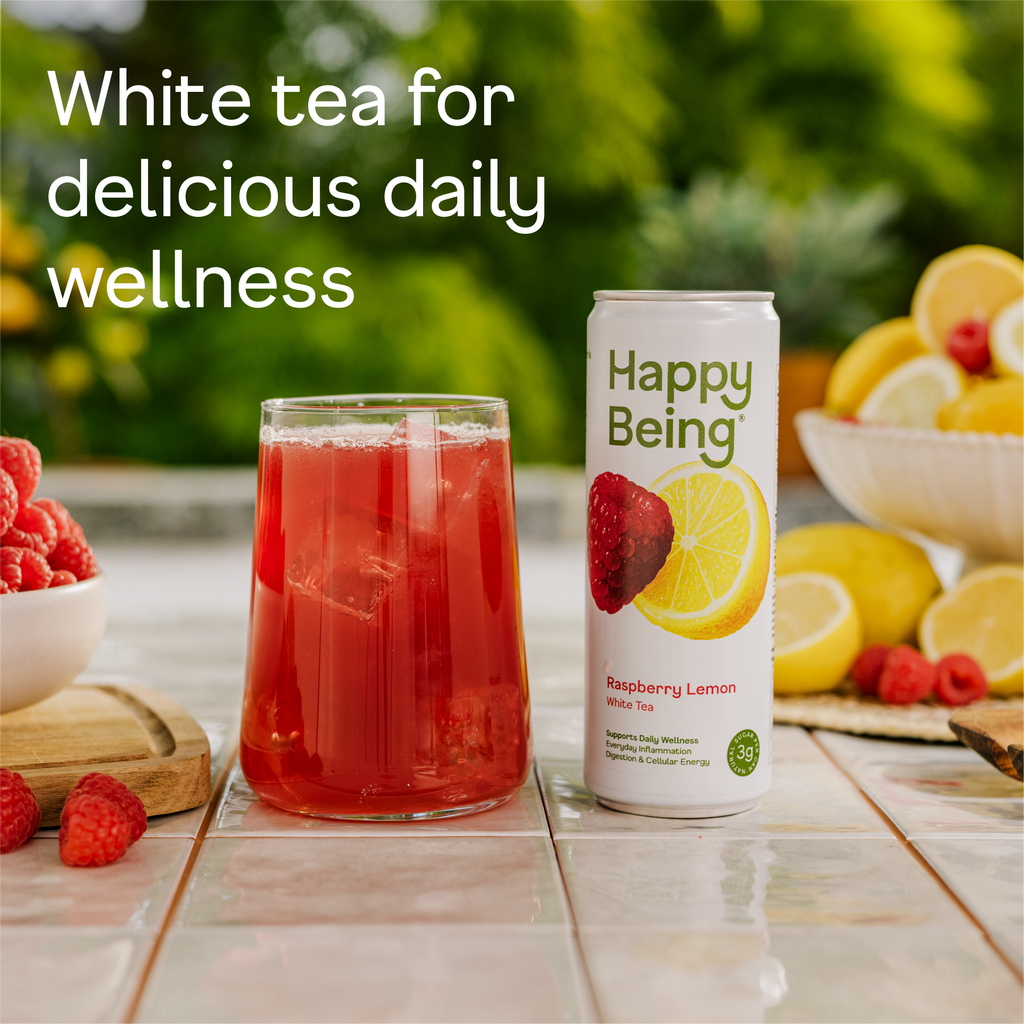
If remembering one more step feels like too much, a drink makes it easier. Happy Being is a light, drinkable source of Vitamin C, made to fit into your day without extra effort.
A cold can often feel easier to reach for than one more thing to remember. Each Happy Being drink pairs Vitamin C with organic white tea and thoughtfully chosen ingredients, giving you daily support in a format you will want to keep reaching for.
That is the whole idea. When daily support for vitamin C for skin fits into a routine you enjoy, the vitamin C skin benefits have a real chance to add up, simply because you keep the habit going.


Frequently asked questions
How much vitamin C-rich food supports skin daily?
A mix of citrus and colorful produce across your meals is a practical goal. Spreading it throughout the day tends to work better than a single large serving.
Do citrus bioflavonoids matter alongside vitamin C?
They are commonly used to complement vitamin C, which is one reason whole citrus fruits are a better choice than isolated nutrients.
How long does consistency take to feel worthwhile?
Skin changes gradually. Give steady habits several weeks, and focus on the routine rather than on daily checks.
Are drinks or supplements easier to stick with?
Supplements have their place, but many people find a drink easier to remember and more enjoyable, which helps with the consistency that matters most.
Support your glow from the inside out
Healthy-looking skin starts with the small things you give your body every day. Happy Being pairs Vitamin C with organic white tea, turmeric, elderberry, pterostilbene, and antioxidant-rich plant compounds in one refreshing can that makes everyday wellness easier to keep.
Build your glow around habits you actually enjoy and explore Happy Being’s wellness blends for an easy way to make Vitamin C part of your daily ritual.
This article is for general wellness information and is not medical advice. If you have specific health concerns, speak with a qualified professional.