How to Make the Best White Tea Beverages for Daily Wellness

Some of the best wellness habits are the quiet ones. Not the overhauls, not the complicated routines, but the small, repeatable choices that feel genuinely good to make. A white tea drink fits that description. It's light, pleasant to reach for, and carries real ingredient value that supports how you feel when you're consistent with it. This guide covers what makes white tea worth knowing, how to make it at home, and how to build it into a routine you'll actually stick with.
What makes white tea different from other teas
White tea is the least processed of the common tea varieties. The leaves are harvested young and dried with minimal intervention. That simplicity is a big part of why it's worth choosing as a white tea for daily use.
Because so little happens between harvest and cup, white tea holds onto a high concentration of the natural compounds found in fresh tea leaves. The flavor reflects that, too. It's delicate, slightly floral, and clean in a way that green or black teas aren't.
White tea also contains less caffeine than most other teas, making it a flexible fit at any time of day. Morning, afternoon, or evening, it won't push your energy up and then drop it. For anyone trying to build the best white tea beverage habit, that kind of flexibility is worth a lot.
White tea benefits worth knowing about
White tea carries a solid antioxidant profile. Antioxidants help the body manage oxidative stress, which quietly builds from daily exposure to factors like a demanding schedule, processed foods, and environmental stressors. Drinking a consistent white tea drink is one of the more straightforward ways to support everyday cellular health.
The benefits of white tea for inflammation and digestion are also worth understanding. Compounds in white tea, particularly catechins and polyphenols, are commonly associated with supporting the body's natural inflammatory response. On the digestion side, white tea may help support a balanced gut environment. These aren't dramatic shifts. They're the kind of steady, background support that becomes meaningful over time.
White tea is also linked to skin health and sustained light energy. The real value, though, is that it's easy enough to drink every day, and consistency is where the white tea benefits for inflammation, digestion, and everything else actually show up.
Simple ways to make a white tea drink at home
Making a white tea drink at home takes very little once you know a few basics. White tea is more sensitive to heat than other teas, so avoid a full boil. Water around 75 to 80 degrees Celsius works well. Steep for two to three minutes. Go longer, and the flavor turns bitter.
For a cold brew, add loose-leaf white tea or a few tea bags to cold, filtered water and let it sit in the fridge for 6 to 8 hours. The result is smoother and lighter than a hot brew, and it makes a great base for other additions.
Iced white tea is one of the most approachable formats and an easy, healthy alternative to sugary drinks. Brew a slightly stronger batch, pour it over ice, and you have a refreshing drink that works at any time of day. It's also the simplest way to make the best white tea beverage without any complicated steps.
How to build a better white tea beverage
White tea's flavor is gentle enough to pair with natural additions, as long as those additions stay light. A thin slice of fresh ginger adds warmth and supports the white tea benefits for inflammation and digestion. A squeeze of lemon lifts the flavor and brings in some Vitamin C. Elderberry, rich in antioxidants, pairs naturally with white tea without competing with it.
When building the best white tea beverage, the goal is to enhance, not mask. Keep additions minimal so the drink stays easy to make and easy to reach for. The moment a habit starts to feel like a project, consistency drops. Keep it simple, and it will keep showing up.
Why iced white tea is one of the best healthy drink swaps

If you want a healthy iced tea alternative to what's already in your routine, iced white tea is worth a serious look. Compared to sodas, sweetened teas, or energy drinks, it's light, naturally low in sugar, and hydrating, with nothing unnecessary added.
A white tea drink in iced form is also genuinely enjoyable to reach for, and that matters more than it sounds. Drinks you actually want are the ones that become habits. Iced white tea doesn't feel like a compromise. This is a good choice that aligns with how you feel.
Making white tea part of a consistent wellness routine
White tea fits into almost any part of the day. In the morning, it offers a lighter caffeine option that won't spike and then crash. In the afternoon, it supports focus without the heaviness of coffee. In the evening, the low caffeine content means it's unlikely to get in the way of winding down.
Pairing a white tea habit with other small rituals, like a short walk or a few minutes away from screens, helps anchor it. Small habits support each other.
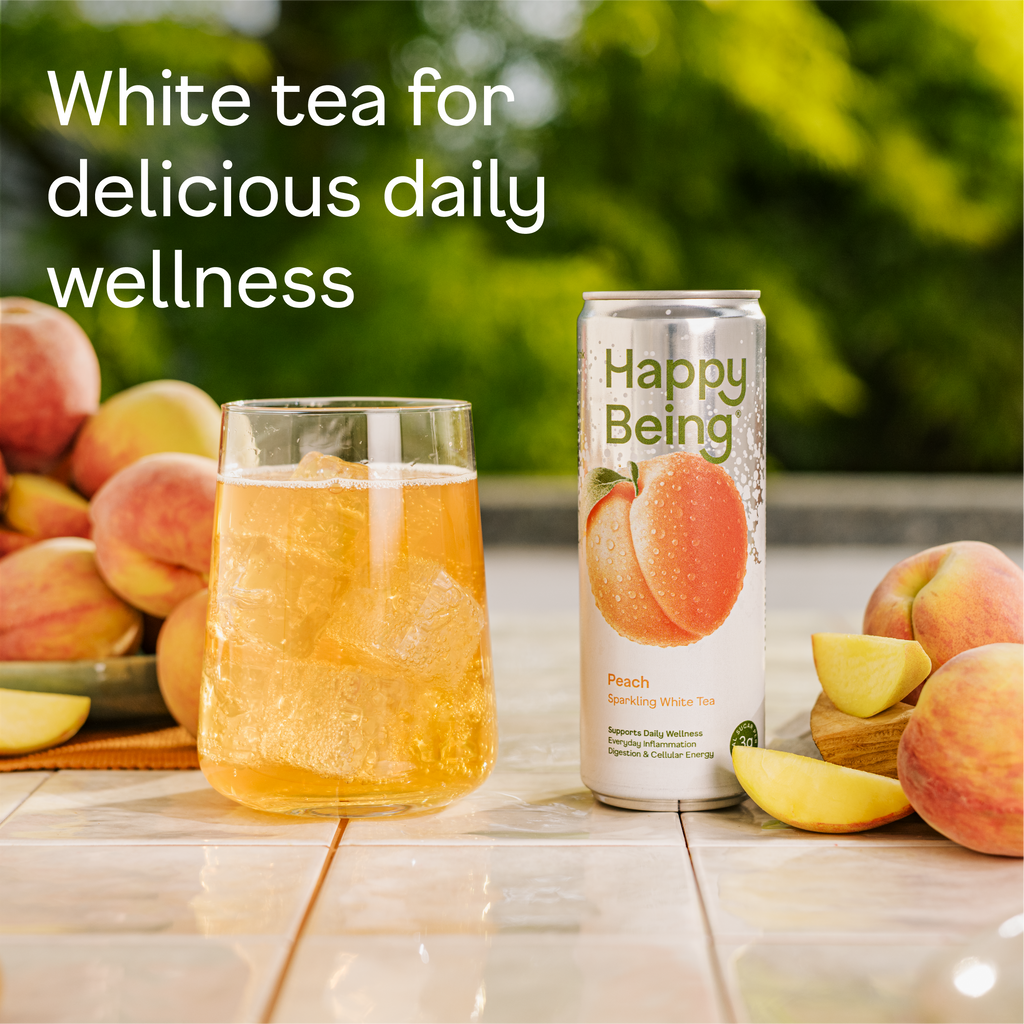
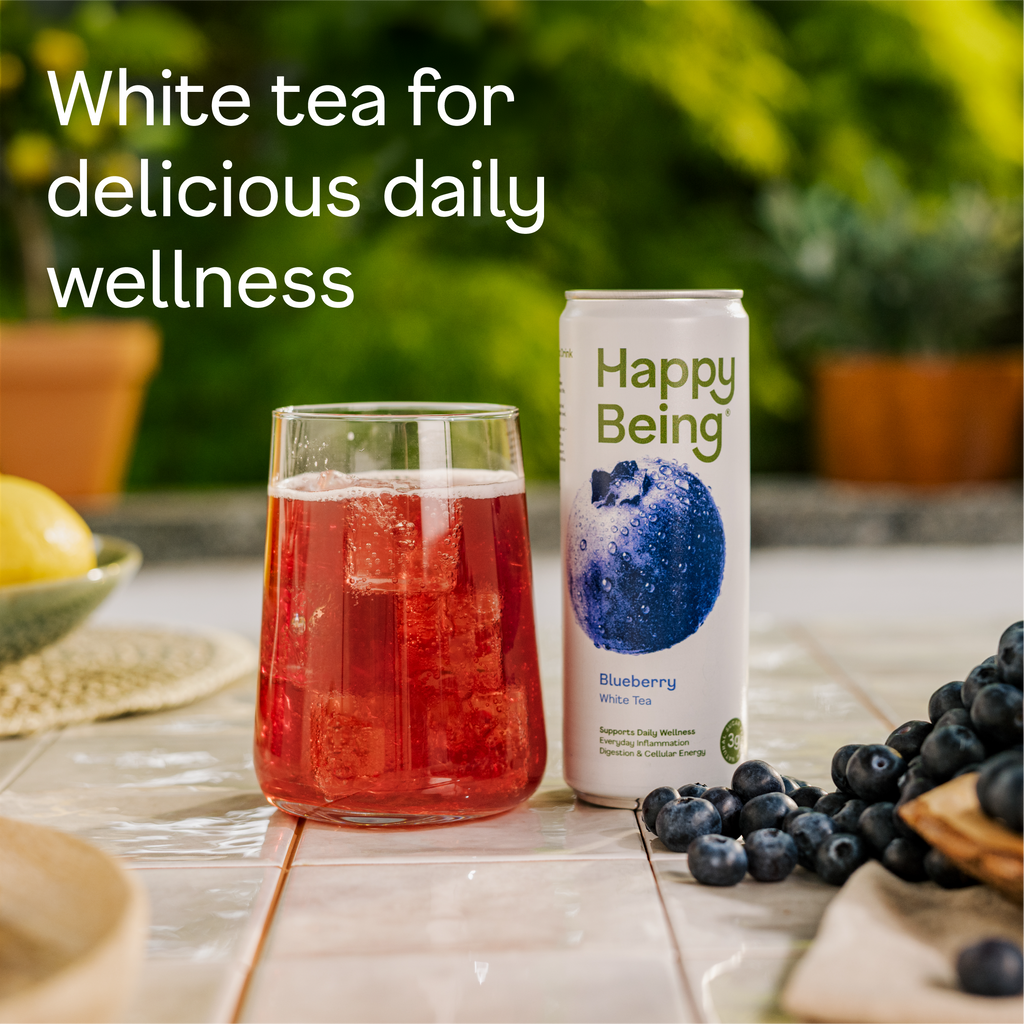
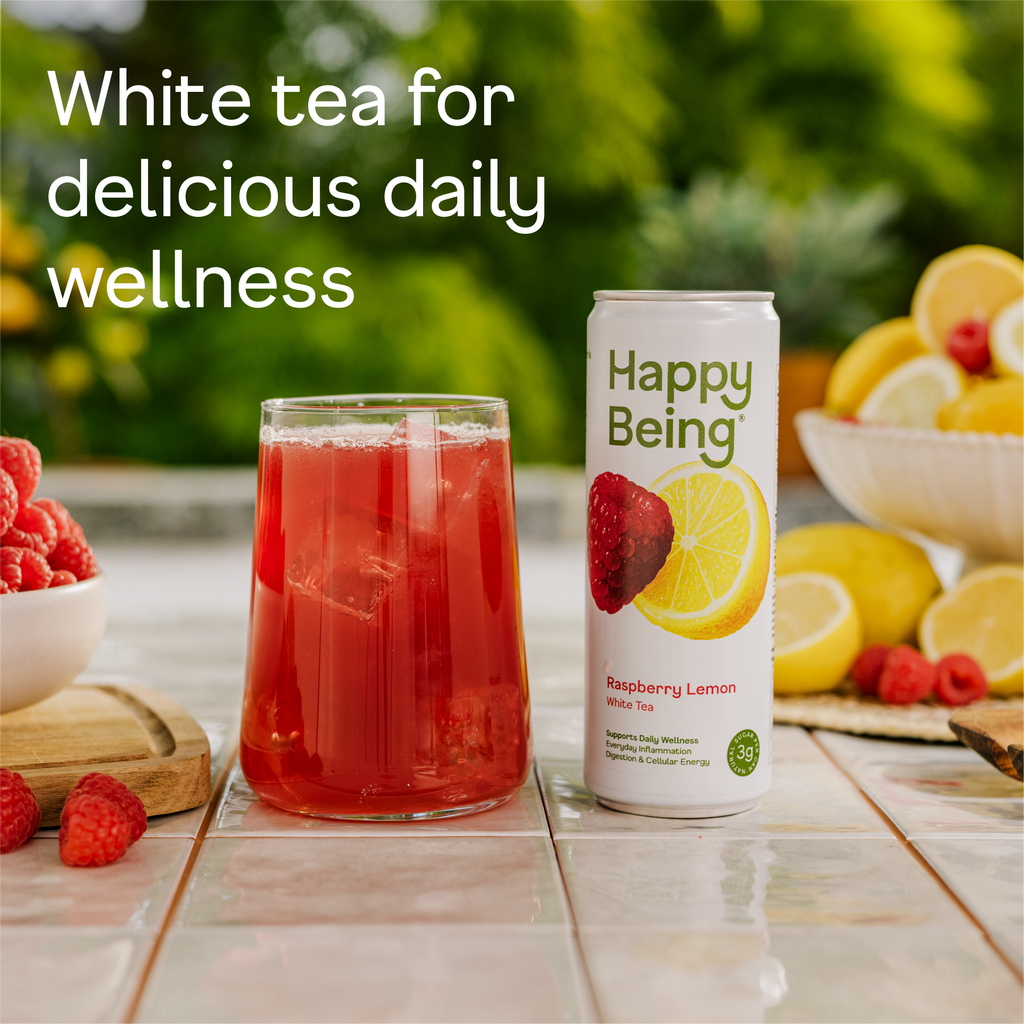
When home brewing isn't realistic, ready-to-drink options like Happy Being make it easy to stay consistent. Happy Being uses organic white tea alongside Turmacin® bioavailable turmeric, elderberry, pterostilbene, and Vitamin C in a light, drinkable format. As a convenient, healthy iced tea alternative, it's designed to be the best white tea beverage for people who want real ingredient support without adding another step to their day.
Make white tea the wellness habit that sticks

The best wellness drink is the one you actually reach for again tomorrow. Happy Being makes that simple with organic white tea, Turmacin® bioavailable turmeric, elderberry, pterostilbene, and Vitamin C in one light, refreshing can. It gives you the ease of a healthy iced tea alternative with ingredients chosen for everyday support, without steeping, mixing, or adding another step to your routine.
Start with one better daily drink and make consistency feel effortless with Happy Being’s White Tea Variety Pack.
Disclaimer: This article is for general wellness information only and is not intended as medical advice. Always consult a qualified healthcare professional for personalized guidance.